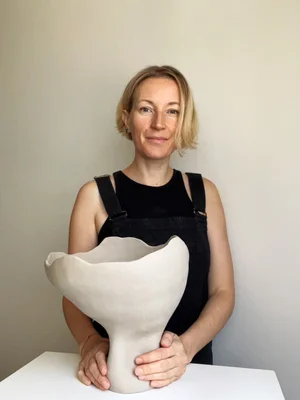
What Makes a Ceramic Object Collectible? A Studio Perspective for Designers and Collectors.
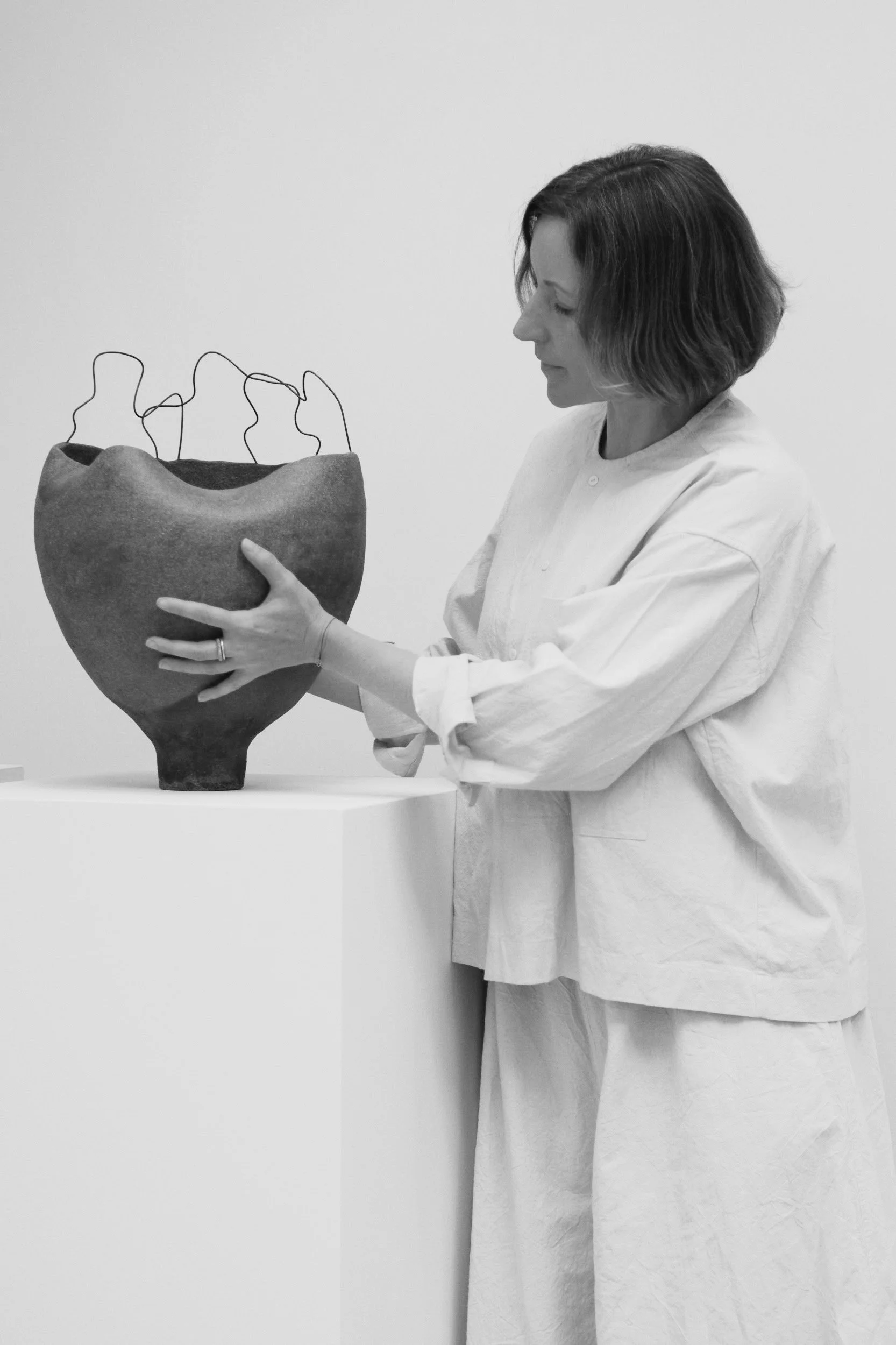
A question I get asked more than almost any other.
It usually comes up in conversation at an opening, in a collector's home, or in an email weeks after a piece has settled into someone's space. They'll tell me, almost apologetically: "I don't know why, but I can't stop looking at it." And that, honestly, is where the answer begins.
Collectibility in ceramics isn't a formula. It isn't a checklist. But it isn't a mystery either. Over years of making and years of conversations with interior designers, collectors, and art advisors who have shaped remarkable rooms with handmade objects, I've come to understand the qualities that make a ceramic piece something people genuinely live with, and return to, again and again.
The Object That Cannot Be Repeated
There is something quietly revolutionary about a handmade ceramic object: it can never be exactly duplicated. Not by me, and not by anyone.
This isn't a romantic idea. It's a material truth. Every piece begins as a responsive conversation between my hands, the clay, the kiln, and time. A glaze breaks differently depending on where it sits in the firing. A subtle pinch in the wall of a vessel changes the way light falls across its surface. The precise way a rim curves is a decision made in a single, unrepeatable moment.
For collectors and advisors working with discerning clients, this is one of the most meaningful qualities a ceramic object can carry: it is genuinely singular. You are not acquiring one of many, you are acquiring the one.
In hospitality, where interiors are designed to feel considered and layered rather than catalogue-assembled, handmade ceramics do something no production piece can. They signal intention. They suggest a story. A guest doesn't consciously think this was made by hand, they feel it, in the warmth and slight imperfection of the surface, in the way the piece seems to belong exactly where it is.
The Artist's Hand as Authorship
Collectible ceramics occupy a particular space somewhere between craft and fine art and what places a piece firmly in that territory is the presence of an intentional artistic voice.
When I make something, I'm not solving a functional problem. I'm exploring a question: about form, about surface, about what quiet beauty can do in a room. Each object is part of an ongoing body of work a conversation between pieces, and between the work and whoever is standing in front of it.
This matters to collectors in a very specific way. Acquiring a work by a ceramicist with a distinct, developing practice means owning a piece of a larger story, one that will continue to unfold. As an artist's work evolves, earlier pieces become more contextually resonant, not less.
For art advisors, the useful question is: does this artist have a recognizable perspective? Is there consistency in their sensibility, even as the work shifts? A strong and evolving voice is one of the clearest signals that a ceramicist's work will hold and grow in both cultural and market significance.
Materiality as Memory
Clay is one of the oldest materials humans have worked with. There is something in that long history that makes a ceramic object feel weighted with time, even when it is brand new.
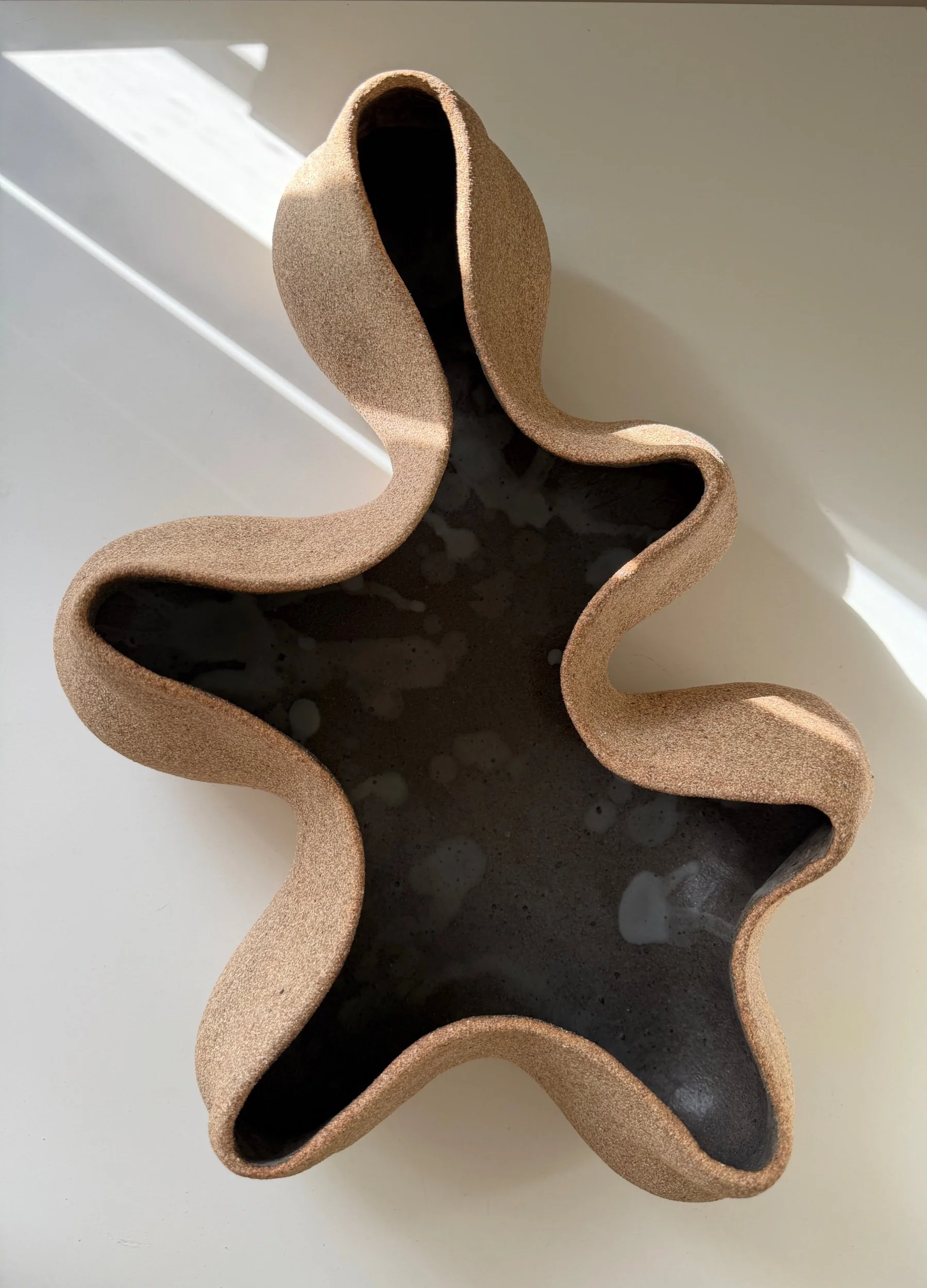
Part of what makes handmade ceramics collectible is the way they carry evidence of their own making. You can see where the clay was pressed. You can see where a glaze pooled or ran in the heat of the kiln. These aren't flaws, they are proof of presence. They are the record of a process that was physical, slow, and irreversible.
Designers often describe this as the quality that makes a handmade object anchor a space. In a room full of beautiful but anonymous things, a ceramic that bears the marks of its making pulls the eye and holds it. It introduces a human scale, a sense of care, that quietly changes the atmosphere of a room.
For hospitality projects, this is especially powerful. Guests are increasingly sensitive to the difference between a space that has been styled and a space that has been curated. Handmade ceramics sit firmly on the curated side of that line.
Scale, Form, and the Question of Presence
Not every beautiful ceramic object is collectible. Some pieces are lovely and functional and quietly satisfying. The truly collectible ones have something more: a presence that exceeds their physical size.
Presence in a ceramic comes from a clarity of intention. A form that is considered all the way around. A surface that rewards close looking. A proportion that feels resolved — not arbitrary, not decorative, but inevitable, as though the piece could not have been made any other way.
The ceramics people return to — the ones that get moved to more prominent places in a home, rather than tucked onto a shelf — are the ones with this quality of inevitability. They don't ask for your attention. They earn it.
This is the piece a designer places as a punctuation mark in a room. The object a collector picks up when they walk past it, not because they plan to, but because they can't help it.
Provenance and the Living Record
In the contemporary ceramics world, provenance matters more than it used to. Who made the piece. When. As part of which body of work. Whether it was exhibited, whether it was documented.
Collecting from living artists is an opportunity to be part of a work's history from the beginning. The documentation gathered now, a certificate of authenticity, studio notes, a direct relationship with the artist, becomes part of the object's record over time.
I think of the pieces I make as objects with futures. The person who brings one of my works into their home today is the beginning of its provenance. That matters to me as an artist, and increasingly it matters to the collectors and advisors I work with.
What I Look For When I Make Something
I know a piece has reached a certain threshold when I find myself reluctant to let it go. When it stays on the table longer than necessary, and I keep returning to it turning it in the light, feeling its weight, looking at the same curve from a new angle. When I think, this one is different.
That instinct has rarely led me wrong. The pieces that find their way to serious collectors, to hotels and residences built with real intention, to the advisors who understand how objects shape a room, those almost always began with that feeling. Something in the studio is quietly refusing to be ordinary.
Collectibility, in the end, is about an object that asks to be noticed. One that holds something essential about the moment it was made, the hands that made it, and the material it came from. One that rewards living with it.
The best pieces don't stop giving. They reveal more.
A collectible object becomes, over time, a kind of companion — changing as the light in the room changes, as the seasons turn, as you pass it on an ordinary Tuesday and see it freshly. That is what I'm after, each time I sit down with a coil of clay. Not a beautiful thing, though it may be beautiful. Something that keeps you company.
For commissions and custom orders, you can reach me through the contact page. New pieces and studio notes are shared through my newsletter.