How to commission custom ceramic art - a guide for interior designers and art advisors
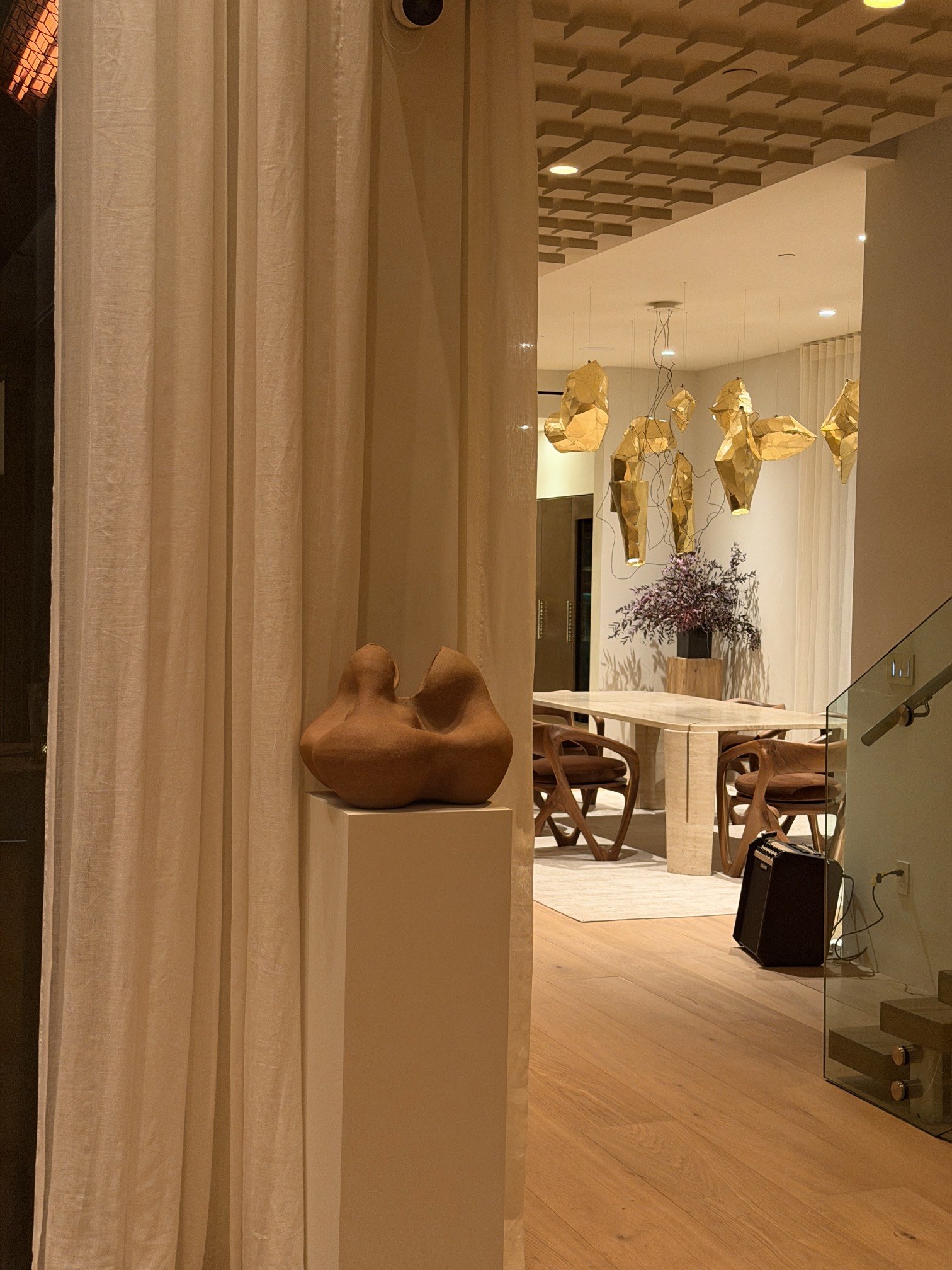
Commissioning a one-of-a-kind object is one of the most rewarding things a designer can bring to a project. A piece made specifically for a space - in the right scale, with the right presence - does something that sourced objects rarely can: it makes the room feel like it was always meant to be exactly this way.
Why commission rather than purchase from existing work
Available pieces are snapshots — objects made in a particular moment, from a particular impulse. They're complete as they are. A commission, by contrast, begins with your space, your client, your specific vision. The scale, the proportion, the finish, even the way the piece relates to the light in a room — all of it can be shaped by the conversation we have before I ever touch the clay.
For hospitality projects, especially, where a piece may anchor an entire lobby or define the atmosphere of a private dining room, that level of intention matters. Art that was made for a space reads differently from art that was placed in one.
What makes a strong commission brief
You don't need to arrive with everything figured out. The most productive briefs I've received leave room for dialogue. That said, a few things help enormously:
Scale and placement. Where will the piece live? Is it a tabletop object, a floor piece, or a wall installation? How much wall or surface space is available? Dimensions — even approximate ones — give me something to work with from the start
The atmosphere you're after. Rather than describing the object itself, describe how you want the space to feel. Anchored and still? Expansive? A sense of movement? I find these directional cues more useful than a specific shape or form, because they guide the work at the level where the decisions actually happen.
Reference images. Anything you love — not necessarily ceramics. Architecture, fabric, a particular landscape. These give me a feel for the visual language you're working in, even when they have nothing to do with clay.
Timeline and project phase. Commissioning works best when it's built into the design timeline early, not added at the end. For a complex piece, I typically need three to five months from brief to delivery. Wall installations and larger-scale works may take longer. The earlier you bring a commission into the project, the more integrated it will feel.
What to expect from the process
Every commission begins with a conversation — by phone, video, or occasionally in person if you're in Los Angeles. From there, I'll put together a proposal that includes a rough concept, dimensions, timeline, and pricing. Once the scope is agreed upon, I ask for a deposit before work begins.
During the making, I share progress with you — photographs at key stages, so you can see the work evolving and weigh in if something needs adjusting. Ceramics carry an inherent unpredictability through the firing process; I'll always communicate anything unexpected, and when it arises, it's usually interesting rather than a problem.
The final piece ships fully insured and carefully packed. I'm also available to advise on installation, particularly for wall pieces.
On pricing
Custom work is priced by scale, complexity, and time. I'm transparent about this from the beginning. For designers working on client projects, I'm happy to discuss trade pricing and can provide documentation for invoicing purposes.
A note on timeline
The most common issue I encounter with commissions isn't process — it's timing. Ceramic work cannot be rushed at the stage that matters most. If a commission is needed for a project opening in six weeks, the honest answer is that it's probably too late to begin. But if you're planning ahead, the timeline is very workable, and the result is an object that no one else will have.
Getting started
If you're an interior designer, art advisor, or working on a hospitality project and you're curious about a commission, the best first step is simply reaching out. You can find more about my current availability and approach on my commissions page, or contact me directly — I'm happy to talk through what's possible before anything is decided.
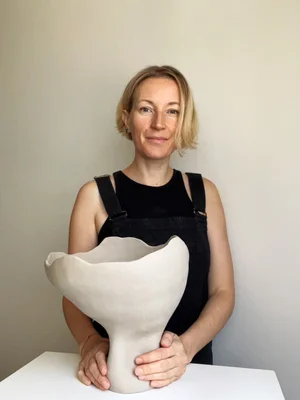
Anna Shipulina is a ceramic artist based in Los Angeles. Her work is held in private collections and has been installed in residential and hospitality spaces across the US.